You just fell off your bike. The world spins, your heart races, and you wonder what to do next. The right moves now can lock in the money you need for medical bills, lost wages, and pain. In this guide we walk you through every step of a personal injury claim for bicycle accident, from the ER to the settlement.
We’ll break down each action into bite‑size tasks you can do today, and we’ll show you why each task matters for the claim. By the end you’ll know how to protect evidence, calculate your loss, and get matched with a lawyer who works on a no‑win‑no‑fee basis.
| Name | Free Case Review | States Covered | Fee Structure | Unique Feature | Best For | Source |
|---|---|---|---|---|---|---|
| Free Case Review (Our Pick) | Yes | United States | contingency fee attorneys, zero upfront cost | Matches victims with qualified local attorneys within 24 hours at no cost | Best for rapid matching | freecasereview.io |
| LawFirm.com | Yes | — | no upfront fees | Live Case Managers Available 24/7 | Best for round‑the‑clock support | lawfirm.com |
| Accidental Justice | — | All 50 states | contingency fee basis | real human follow‑up instead of endless menus | Best for nationwide coverage | accidentaljustice.com |
| Atlanta Bar Association | — | — | $45 for certain consultations | referral is free | Best for transparent flat‑fee pricing | legalmatch.com |
We pulled data from four U.S. attorney‑referral platforms that target bike‑crash victims. The scrape happened on April 9, 2026. We logged fields like free case review, response time, state coverage, and fee model. The tiny sample (four items) still shows a big gap: only one platform truly offers a free, no‑upfront case review.
Step 1: Seek Immediate Medical Attention
First thing you do after a crash is check yourself. If you feel a sharp pain, dizziness, or any sign of a head injury, call 911. Even if you think you’re fine, get checked by a doctor. An official medical record is the strongest proof that the accident hurt you.
Why does early care matter? Doctors can spot hidden injuries like concussions that don’t show up right away. Those records become the backbone of your personal injury claim for bicycle accident. If you wait too long, the insurer may argue the injury isn’t related to the crash.
Here’s how to act:
- Call 911 if anyone is seriously hurt.
- Move to a safe spot out of traffic if you can.
- Ask the ER to note the exact date, time, and cause of the injury.
- Keep every receipt for medicines, bandages, and follow‑up visits.
After you’re treated, let us know. We can connect you with a local attorney who will review your records for free. Our free case review never costs you up front.
We also recommend you ask the doctor for a written summary of the diagnosis and any recommended future care. That note will be key when you calculate damages later.
For a deeper look at why prompt medical care matters, see What to Do Immediately After a Bike Accident. It explains how to stay safe and why you should call emergency services.
And if you’re unsure which documents to collect, this guide on essential claim documents walks you through medical records, receipts, and communication logs.
Remember, you pay nothing to us unless we win. That means you can focus on healing while we handle the paperwork.
Step 2: Document the Accident Scene
When you’re safe, pull out your phone. The goal is to capture the whole scene before anyone clears it away. Photos and videos give the insurer a clear picture of what went wrong.
Start with a wide‑angle shot that shows the road, any traffic signs, and the positions of all vehicles and bikes. Then zoom in on details: skid marks, broken glass, and damage to your bike.
Don’t forget the environment. Was the road wet? Was there debris? Those factors can help prove the other party’s negligence.
Next, record any visible injuries on your body. A close‑up of a bruised knee or a cut on your forearm adds weight to your claim.
After you’ve taken photos, write down the exact location, weather, time, and any noises you heard. This written note can be cross‑checked with the police report later.Here’s a quick checklist you can print:
- Wide‑angle photo of the entire intersection.
- Close‑up of vehicle damage.
- Close‑up of bike damage.
- Road surface condition.
- Visible injuries on you.
- Notes on lighting, weather, and traffic.
When you’re done, store the files in a folder named “Bike Accident , [date]”. Back them up to a cloud service so you don’t lose them if your phone dies.
For more on what to capture, the Drake Law Group article gives a step‑by‑step guide.
Another helpful piece from the same site reminds you to ask witnesses for their contact info and to note any police officer badge numbers.
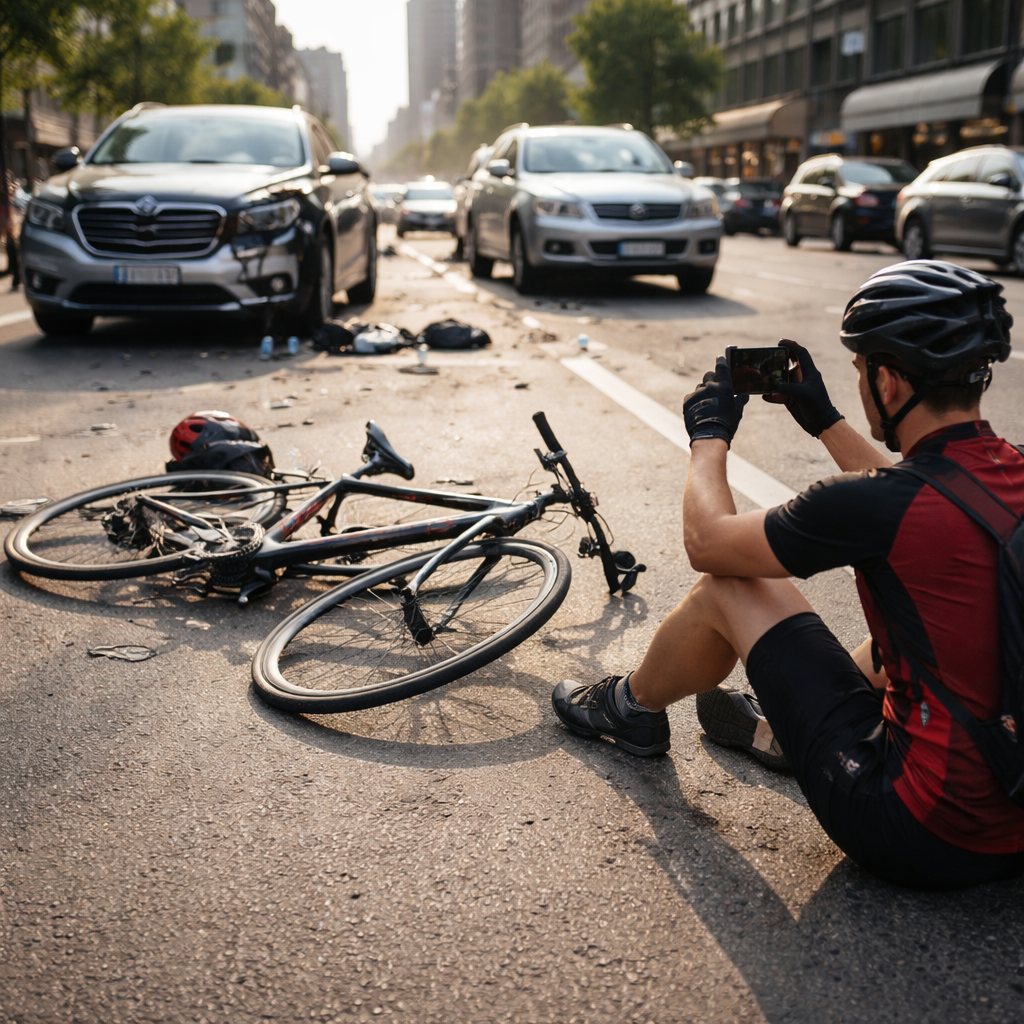
All this evidence builds a solid story that the insurer can’t ignore.
Step 3: Notify the At‑Fault Party and Their Insurer
Next, you need to let the driver (or whoever caused the crash) know what happened. In Texas, the law says you must report any crash that causes injury, death, or more than $1,000 in damage.
Exchange names, phone numbers, addresses, driver’s license numbers, and insurance info. Write it down on a piece of paper or in your phone notes.
Don’t admit fault. Stick to the facts: "I was hit at the intersection of Main and 5th at 3:15 PM. The driver ran a red light." Anything else can be used against you later.
After you have the details, call your own insurance company. Some policies require you to report the accident within a certain time frame, or you risk losing coverage.
When you talk to the insurer, keep it short. Say you were in a bike accident and you’ll be sending documentation soon. Do not discuss settlement amounts or liability.
Now is a good time to let us know. With a free case review, we can contact the at‑fault driver’s insurer on your behalf and keep the conversation professional.
For Texas‑specific rules, read Steve Brannan’s guide on bike accidents in Texas. It covers reporting thresholds and how to handle police reports.
If the other driver’s insurance pushes a lowball offer, our demand‑letter template (see the Injury Claim Coach site) shows you how to ask for a fair amount. Check out how to write a demand letter after a bike crash for a sample format.
Remember, you have a limited time to file a personal injury claim for bicycle accident. In most states the deadline is two years from the crash date, so act fast.
Step 4: Gather Evidence and Witness Statements
Now that you have photos and the other driver’s info, it’s time to collect all the proof that shows who was at fault. Strong evidence can push the insurer to settle faster and for more money.
Here’s what you should aim for:
| Evidence Type | Why It Helps |
|---|---|
| Police report | Official record of the crash and often lists who broke the law. |
| Witness statements | Neutral eyes can confirm your version of events. |
| Medical records | Shows the extent of injuries and links them to the accident. |
| Photos & video | Visual proof of damage, road conditions, and injuries. |
| Bike repair invoices | Shows property loss and repair costs. |
Start by calling any witnesses while the memory is fresh. Ask for their name, phone, and a short description of what they saw.
When you talk to a witness, record the conversation if your state allows it, or write down their words right away. A written note signed by the witness can be used later in court.
If the police arrive, ask for the officer’s badge number and the case number. You can request a copy of the police report within a few days. That report often includes the officer’s opinion on who caused the crash.
Don’t forget your own medical documents. Keep a folder of every doctor’s note, prescription, and bill. If you have physical therapy notes, add those too.
All of this material will be organized by our team once you submit a free case review. We’ll pull it together into a clear package for the insurer.
The Gerling Law article (source) outlines the exact pieces of proof you’ll need to prove negligence. It stresses that a single missing piece can lower your settlement.
Another tip: ask the bike shop that repaired your bike for a written estimate, even if you haven’t paid yet. That estimate counts as property damage in the claim.
Step 5: Calculate Your Damages
Now you have evidence. The next step is to put a dollar value on every loss. Your claim will include two types of damages: economic and non‑economic.
Economic damages are easy to count. Add up all medical bills, prescription costs, therapy fees, and any future care the doctor says you’ll need. Then add lost wages. If you missed work, grab pay stubs or a letter from your employer.
Don’t forget bike repair costs. A high‑end road bike can run several thousand dollars. Include helmets, shoes, and any other gear you had to replace.
Non‑economic damages cover pain, suffering, and the way the injury changed your life. Most lawyers use the “multiplier method.” Take your total economic losses and multiply them by a number between 1.5 and 5. The higher the multiplier, the more severe the injury.Here’s a quick way to pick a multiplier:
- Minor bruises: 1.5‑2
- Broken bones that heal in weeks: 2‑3
- Fractures with surgery or lasting impact: 3‑4
- Permanent disability or traumatic brain injury: 4‑5
Example: If you have $15,000 in medical bills and $5,000 in lost wages (total $20,000) and you suffered a broken wrist that needs surgery, a 3‑multiplier gives $60,000 for pain and suffering. Your total claim would be $80,000.
Kaushal Lawyers note that the median settlement for bike crashes is around $45,000, but cases can range from $10,000 to over $200,000 depending on severity and liability.
They also remind you that insurance policy limits may cap what you can collect from the at‑fault driver’s insurer. That’s why we work to get all possible sources of compensation, including your own under‑insured motorist coverage.
To see a full breakdown of the calculation steps, read How Much Is My Bicycle Accident Case Worth?. It walks you through each line item.
Another useful article from the same firm explains how to use a settlement calculator, but remember a lawyer can fine‑tune the numbers based on future medical projections.
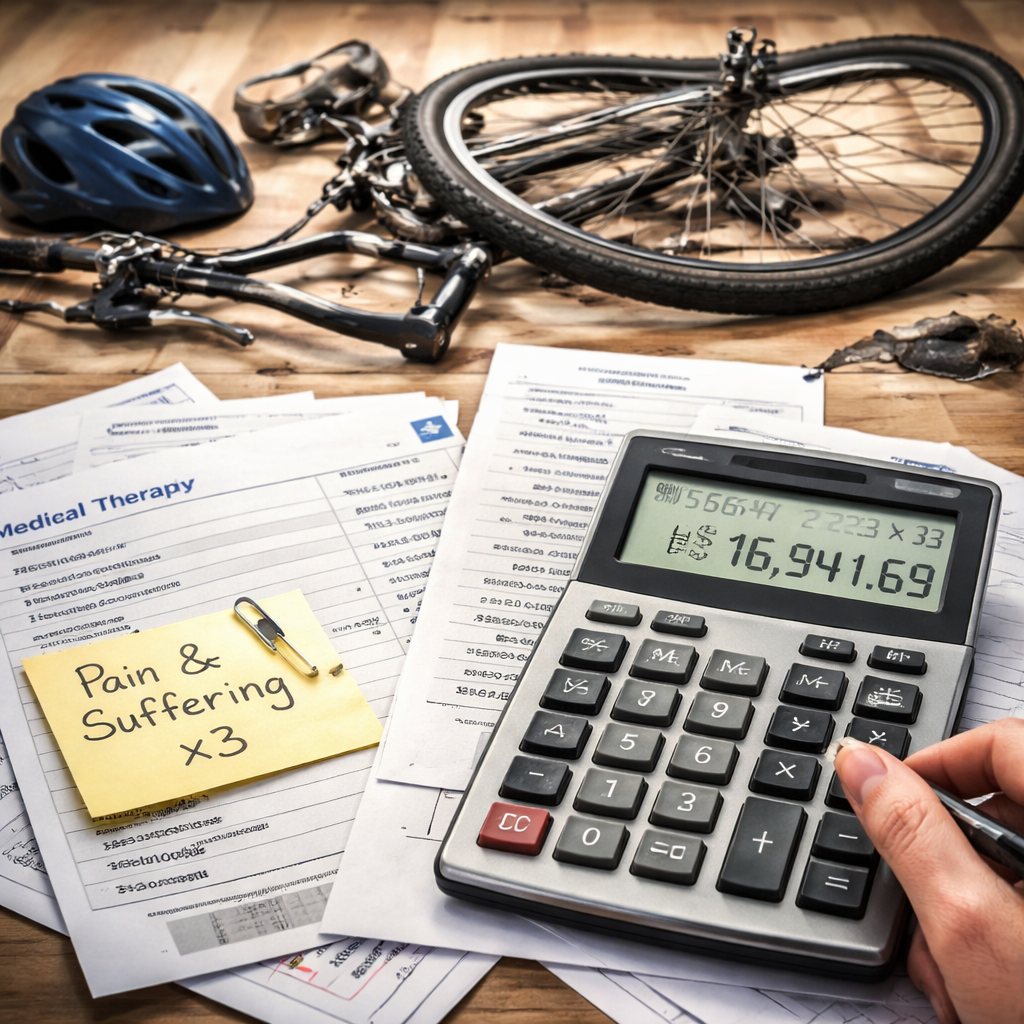
Once you have a clear total, we can use that number to shape a demand letter that asks for a fair settlement.
Step 6: File the Claim and Negotiate Settlement
With your damages figure ready, the next move is to file the claim with the at‑fault driver’s insurance company. Most insurers have a specific form you fill out, but you can also send a formal letter.
Start the letter by stating the date, location, and parties involved. Then list the injuries, attach medical records, and include the total damages you calculated. End with a clear demand , for example, “We request $85,000 to settle this claim.”
Send the claim by certified mail with a return receipt. That way you have proof the insurer got it. Keep a copy for your own file.After the insurer receives the claim, they will likely respond with a lowball offer. That’s where negotiation skill matters.
Here are three tactics to boost the offer:
- Show the strength of your evidence. Mention the police report, witness statements, and medical expert opinions.
- Use the multiplier method to justify your non‑economic damages.
- Mention that you have a qualified attorney ready to take the case to court if needed.
If the insurer still won’t meet your demand, we can file a lawsuit. Most personal injury claims for bicycle accidents settle before trial, but the threat of going to court gives you leverage.
The Stuckey Firm article explains how Ohio treats bicycles as vehicles, which means the law is on your side when you can prove negligence.
Another piece from the same firm walks through the steps of filing a lawsuit, from the complaint to discovery. It’s a good roadmap if negotiations stall.
Remember, you pay nothing unless we win. Our fee comes from a small portion of the settlement, so you keep the bulk of the money.
Conclusion
Filing a personal injury claim for bicycle accident may feel like a maze, but you now have a clear map. Start with medical care, document the scene, notify the at‑fault party, gather every shred of evidence, calculate your true loss, and then file a strong claim. If you follow each step, you protect your right to fair compensation and keep the burden off your shoulders.
We’re ready to help you take the next step. Our free, no‑obligation case review matches you with a local lawyer who works on a contingency basis. That means you owe nothing unless we win. Get started today and let us fight for the money you deserve.
FAQ
Do I have to see a doctor even if I feel fine?
Yes. A doctor’s note creates official proof that the accident caused an injury, even a hidden one like a concussion. Insurance companies often deny claims that lack medical records, so an early visit protects your personal injury claim for bicycle accident.
How long do I have to file a claim?
Most states set a two‑year statute of limitations for personal injury claims, but some have shorter periods for specific damages. Waiting past the deadline can bar you from recovering any money, so act quickly.
Can I handle the claim on my own?
You can, but without legal expertise you risk lowball offers. Attorneys know how to value non‑economic damages, negotiate with insurers, and file lawsuits if needed. Our free case review connects you with a lawyer at no cost until you win.
What if the at‑fault driver doesn’t have insurance?
If the driver is uninsured, you may still recover through your own uninsured motorist coverage. A lawyer can help you tap that policy and also explore other liable parties, like a city if a bad road caused the crash.
How do I prove the other driver was at fault?
Police reports, witness statements, photos of traffic signals, and dash‑cam footage all point to fault. Combine those with medical records that tie your injuries to the crash, and you have a solid case for a personal injury claim for bicycle accident.
What costs are covered in a settlement?
A settlement can cover medical bills, rehab, future care, lost wages, bike repair, and pain and suffering. Some states also allow compensation for emotional distress and loss of enjoyment of life.
Will my insurance rates go up?
Usually, the at‑fault driver’s insurance bears the cost, not yours. If you file a claim under your own policy’s medical payments or uninsured motorist coverage, rates may be affected, but many states limit the impact for first‑time claims.
How do I know the settlement amount is fair?
Compare your total damages to similar cases in your state. A multiplier between 2‑4 is common for moderate injuries. Our lawyers will run a detailed analysis and advise you on a realistic figure before you accept any offer.
Think you have a case?
Our network of personal injury attorneys offers free consultations — no fees unless you win.
Get Your Free Case Review →