Brain injuries are scary. They can change your life in an instant. In this guide you’ll learn how to file a personal injury claim for brain injury from start to finish. We’ll walk you through medical care, paperwork, choosing a lawyer, and getting a fair settlement.
An analysis of 15 essential claim factors across 9 U.S. sources reveals that the two items stressing advanced imaging (DTI, SWI, MRS) are the only ones warning that standard MRI/CT scans often miss brain injuries, a surprise for anyone assuming conventional scans are enough.
| Factor | Description | Required Documentation | Common Mistake | Best For | Source |
|---|---|---|---|---|---|
| Medical Treatment and Specialist Evaluation | Ensure the client is evaluated by a neurologist and obtain specialist reports to document the brain injury for the jury. | neurologist evaluation; neuro‑psychological testing; specialist medical reports; treatment records | Not obtaining early specialist evaluation, which weakens proof of injury | Best for specialist documentation | advocatemagazine.com |
| Advanced Imaging (DTI, SWI, MRS) | Specialized imaging techniques such as Diffusion Tensor Imaging, Susceptibility Weighted Imaging, and Magnetic Resonance Spectroscopy are more sensitive than standard MRI/CT for detecting mild brain injuries. | DTI scan results; SWI images; MRS data; radiology reports | Relying solely on conventional MRI or CT scans to prove injury | Best for detecting subtle injuries | advocatemagazine.com |
| Initial Client Interview | Conduct an exhaustive interview with the client and family members to uncover the injury mechanism, symptoms, and pre‑existing conditions. | interview notes; family statements; power of attorney documents; accident details | Failing to involve family members who may provide crucial recollections | Best for comprehensive fact gathering | advocatemagazine.com |
| Diagnosis Criteria | A traumatic‑brain injury is diagnosed based on loss of consciousness, memory loss, confusion, disorientation, or neurologic signs such as skull wound, seizures, or headache. | medical records; CT scan results; MRI scan results; neurologist evaluation; witness statements | Assuming a normal MRI or CT scan rules out a brain injury | Best for defining injury signs | advocatemagazine.com |
| Memory Deficits and Evidence Gathering | When a client cannot recall accident details, gather circumstantial evidence and expert testimony to establish liability. | accident reports; witness statements; expert testimony; medical expert reports | Allowing memory deficits to excuse non‑compliance with discovery or mitigation requirements | Best for handling memory gaps | advocatemagazine.com |
| Defense Tactics and Plaintiff History Scrutiny | Defendants often allege the plaintiff is faking injuries and will scrutinize the plaintiff’s entire medical and personal history. | comprehensive medical history; childhood records; psychiatric records; prior school/work records | Neglecting to secure and organize the plaintiff’s full historical records, leaving them vulnerable to attacks | Best for anticipating defense attacks | advocatemagazine.com |
| Proving Diagnosis of TBI | Veterans must first establish that they sustained a traumatic brain injury before seeking compensation for its residual effects. | self‑report of injury; medical records; screening instruments such as the Brief Traumatic Brain Injury Screen; witness statements | Relying solely on medical records, which may be missing or incomplete, can prevent establishing the diagnosis. | Best for veteran claims | ncbi.nlm.nih.gov |
| Preservation of Physical and Digital Evidence | Preserve vehicle photographs and monitor social‑media activity to prevent evidence loss or damaging postings. | photographs of vehicle; vehicle inspection reports; social‑media logs; screenshots of posts | Failing to preserve the vehicle or allowing careless social‑media posts that can be used against the client | Best for evidence preservation | advocatemagazine.com |
| Time Lapse Between Injury and Diagnosis | Promptly notify the defense once a brain injury is diagnosed to avoid the claim being barred by delay. | notice letters to defense; amendment filings; timeline of diagnosis | Delaying notice or amendment after diagnosis, risking the claim being barred | Best for timely notice | advocatemagazine.com |
| Immediate Medical Attention | Seeking prompt medical care after an accident provides documentation of head trauma and early symptoms, strengthening the claim. | Hospital records documenting head trauma; loss of consciousness; disorientation; reports of headaches, dizziness, confusion | Delays in seeking treatment weaken claims. | Best for early treatment proof | smithball.com |
| Disability Benefits Questionnaire (DBQ) | A standardized form used by clinicians to document the severity of TBI residuals for the VBA rating decision. | Completed DBQ; clinician’s examination notes; supporting medical evidence | The current DBQ does not include questions for insomnia, vestibular dysfunction, or near‑vision problems, leading to under‑rating. | Best for benefits documentation | ncbi.nlm.nih.gov |
| Statute of Limitations | A law that sets how long you have to file a brain‑injury lawsuit; the period varies by state and can be as short as one year or several years. | — | Missing the filing deadline | Best for deadline awareness | superlawyers.com |
| Discovery Rule | The court may apply a discovery rule where the statute starts when the plaintiff knows or should know of the latent brain injury. | — | — | Best for discovery‑rule applications | courtnewsohio.gov |
| TBI Case Definition (ICD-9-CM codes) | Specific CDC‑recommended ICD‑9‑CM diagnosis codes were used to identify traumatic brain injuries. | ICD-9-CM diagnosis codes | — | Best for coding accuracy | pmc.ncbi.nlm.nih.gov |
| TBI Severity Classification (Abbreviated Injury Scale) | Severity is classified as mild (AIS <3), moderate (AIS = 3), or severe (AIS > 3) using the Abbreviated Injury Scale for head injuries. | Abbreviated Injury Scale (AIS) scores | — | Best for severity grading | pmc.ncbi.nlm.nih.gov |
Step 1: Seek Immediate Medical Care
If you think you’ve hit your head, get checked right away. Even a small bump can hide big problems.
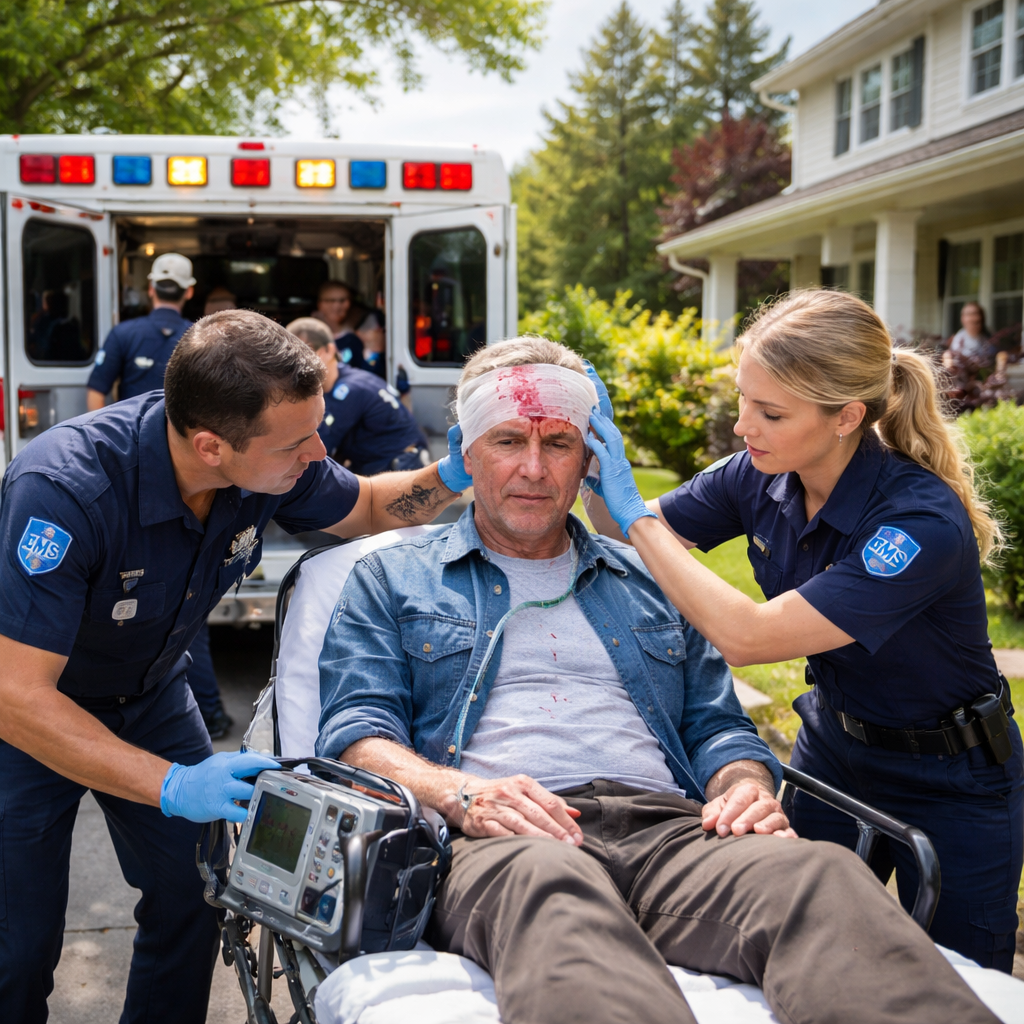
Doctors will look for signs like loss of consciousness, confusion, or a headache that won’t go away. Those clues help prove a personal injury claim for brain injury later on.
Why act fast? Early records create a clear timeline. That timeline links the accident to the injury. Insurance companies love a clean timeline because it makes the claim look weak.
Here’s a quick checklist you can follow at the ER:
- Ask for a copy of the triage note.
- Request any scans (CT, MRI) and the radiology report.
- Make sure the doctor writes down your symptoms and how they started.
Don’t be shy about asking. It’s free to get your own records, and it protects your claim.
When you leave the ER, you’ll likely get a discharge summary. That paper notes the diagnosis and any follow‑up appointments. Keep it safe; it’s gold for your claim.
Want more detail on best practices? The American College of Surgeons has a thorough guideline on traumatic brain injury care. You can read it here. The same PDF also explains why you should get a neurologist’s opinion within a week. The sooner you have that specialist report, the stronger your personal injury claim for brain injury will be.
Another reason to act fast is that some symptoms show up days later. If you wait, you might lose the chance to link them to the accident.
For example, a friend of mine waited two weeks after a car crash before seeing a doctor. He later developed severe migraines, but the insurer argued the migraines were unrelated because there was no immediate treatment. He lost thousands in compensation.
Take note: you can request a copy of the hospital’s billing statement too. Those bills prove you paid for care and can be added to the damages you seek.
Finally, keep a journal of how you feel each day. Write down headaches, dizziness, memory lapses, and anything that changes. This personal log fills gaps that doctors might miss.
When you’ve gathered the ER paperwork, you’ll be ready for the next step: building the evidence file.
Step 2: Document Injuries and Expenses
Now you have the medical records. Next, you need to turn them into a story that shows the real impact of your brain injury.
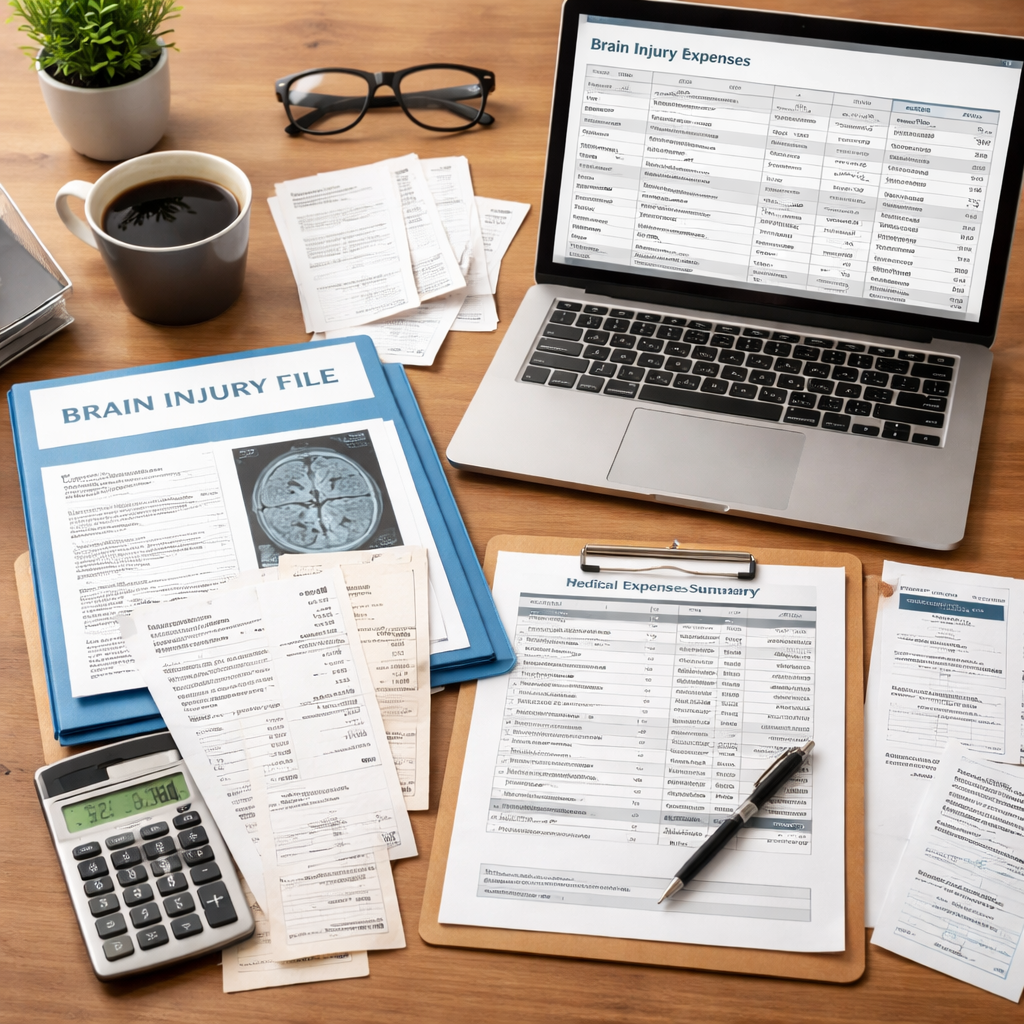
Start a master folder, physical or digital. Label it “Brain Injury Claim.” Inside, create sub‑folders for each type of document.
- Medical Records
- Bills & Receipts
- Employment Records
- Personal Journal
Every receipt matters. Even a $5 over‑the‑counter pain reliever is part of your loss.
Why keep receipts? Courts look for proof of out‑of‑pocket costs. If you can’t show a receipt, they may cut that amount from your settlement.
Let’s break down the key categories.
Medical Records
These include ER notes, specialist reports, imaging results, and therapy logs. The research table tells us that specialist evaluation is the most powerful piece of evidence. That means a neurologist’s report can double the weight of your claim.
Ask each provider for a complete copy. Use a signed release form so they can send the files directly to your attorney. The law firm we work with often helps you fill out that form for free.
Don’t forget neuro‑psychological testing. Those tests measure memory, attention, and processing speed, areas often hit by a brain injury.
For a deep dive on what medical docs you need, read the guide from G. Aldrich Law here. The same article also lists common pitfalls like forgetting to request the radiology report.
Financial Records
Gather pay stubs, tax returns, and a letter from your employer showing lost wages. If you can’t work, you’ll need proof of income loss.
Also collect any insurance statements that show denied claims. Those rejections can be used to argue that the insurer knows the injury is real.
The CDC offers a handy checklist for adult mild TBI. You can view it here. It reminds you to track symptoms over time, which is useful for future medical expense estimates.
Personal Impact
Beyond bills, you need to show how the injury changed your life. Ask family members to write short statements about missed events, mood changes, or new caregiving needs.
These statements become powerful testimony at settlement talks.
Now, let’s talk about a tool that many people overlook: a functional capacity evaluation (FCE). An FCE is a report from a physical therapist that rates how much work you can still do. It can add thousands to your claim.
Here’s a step‑by‑step way to collect everything:
- Make a list of every doctor you saw.
- Call each office and ask for a full record package.
- Send a signed release to your attorney (free through our service).
- Scan each document and save it in the appropriate sub‑folder.
- Create a spreadsheet that tallies each expense and dates.
When you’ve built this file, you’ll have a solid base for a personal injury claim for brain injury.
Watch this short video that explains why a tidy evidence file helps negotiations.
Step 3: Hire a Specialized Brain Injury Attorney
You’ve got the medical proof and the expense list. Now you need a lawyer who knows brain‑injury law inside out.
Ask these questions when you meet a potential attorney:
- How many brain‑injury cases have you handled?
- What is your success rate for settlements?
- Do you work on a contingency basis (you pay nothing unless you win)?
These questions cut through the fluff and get to the facts.
Why focus on specialization? The research shows that “Medical Treatment and Specialist Evaluation” is the best factor for strong documentation. A lawyer who works with neurologists will know how to get those reports fast.
One common mistake is hiring a general personal‑injury lawyer who never dealt with brain‑injury cases. They might miss the chance to get advanced imaging (DTI, SWI, MRS) that can uncover hidden damage.
Our partner network at Free Case Review can match you with a local brain‑injury specialist at no cost. The match happens in 24 hours, and there’s no fee unless you win.
Read more about what to expect during the attorney interview here. The same article also warns that in Virginia the filing deadline is two years, which shows why you need a lawyer fast.
When you talk to a lawyer, bring your master folder. Let them see the medical reports, bills, and personal statements. A good lawyer will spot gaps you missed.
Ask the lawyer how they will handle the “Statute of Limitations.” That factor in the research table has no documentation guidance, so you need a lawyer who will keep track of deadlines for you.
Finally, make sure the lawyer agrees to a “no win, no fee” agreement. That means you pay nothing unless you recover compensation.
Step 4: File and Negotiate Your Claim
With a lawyer on board, it’s time to file the claim. Your attorney will draft a complaint that lists the negligent party, the injury, and the damages you seek.
The complaint will attach the medical records, bills, and personal impact statements you gathered. Those attachments are the backbone of a personal injury claim for brain injury.
After filing, the insurer will send a demand letter. This is where negotiation starts.
Here are three tactics your lawyer may use:
- Show the specialist’s neurologist report as proof of severe injury.
- Present the functional capacity evaluation to prove loss of earning ability.
- Highlight any advanced imaging that reveals hidden damage, even if a standard MRI was normal.
Why does this work? The research table tells us that advanced imaging is the top runner‑up for uncovering hidden injuries. When you have those images, the insurer can’t claim the injury is “minor.”
If the insurer makes a lowball offer, your lawyer can file a motion for a higher amount, citing the documentation you have.
Don’t forget the deadline. The “Statute of Limitations” factor warns that missing the filing deadline will end the case. Your lawyer will file a notice of claim well before the deadline to avoid that trap.
When a settlement is reached, you’ll sign a release. The release transfers the right to sue in exchange for the payment. Review it carefully with your lawyer.
If the case goes to trial, the same evidence you built will be presented to a jury. That’s why each piece of documentation matters.
Throughout the process, stay in touch with your lawyer. Ask for updates every two weeks. Clear communication keeps the case moving and avoids surprises.
For more on how settlements work, you can read a detailed guide at FACS Best Practices. Another helpful resource is the CDC checklist that explains the long‑term impacts of mild TBI here. Both sources reinforce the importance of solid documentation.
Conclusion
Filing a personal injury claim for brain injury can feel overwhelming, but you don’t have to go it alone. Get medical care right away, collect every record, hire a lawyer who knows brain‑injury law, and let a skilled attorney file and negotiate for you.
Remember: the sooner you act, the stronger your evidence. Use the checklists we shared, keep a tidy folder, and let Free Case Review connect you with a qualified attorney at no cost. You pay nothing unless you win, so there’s no risk to get started.
If you’re ready to protect your rights, submit your case details today. We’ll match you with a local specialist within 24 hours, free and confidential. Your recovery and compensation are worth the effort.
FAQ
What is the first thing I should do after a head injury?
Seek medical care right away. Even if you feel fine, an ER visit creates a record that links the accident to the injury. That record is a key part of any personal injury claim for brain injury because it shows the injury happened right after the event.
How long do I have to file a personal injury claim for brain injury?
It depends on the state, but many states have a two‑year deadline. Missing that deadline means the claim is barred. That’s why you should talk to a lawyer quickly so they can track the exact filing date for you.
Do I need advanced imaging like DTI or SWI?
Advanced imaging isn’t required in every case, but it can uncover injuries that a regular MRI or CT scan might miss. The research shows only two factors warn about standard scans missing damage, so getting a DTI or SWI can strengthen your personal injury claim for brain injury.
Can I handle the paperwork myself?
You can collect the records, but a lawyer knows which documents the insurance company will challenge. Missing a key report, like a neurologist’s evaluation, can cut your settlement. Let a specialist attorney guide you so you don’t leave gaps.
What kinds of damages can I recover?
You can recover medical bills, lost wages, future care costs, and pain‑and‑suffering. If the injury affects your ability to work long‑term, a functional capacity evaluation can help prove future loss, adding to the total compensation you seek.
Is there any cost to start the process?
No. Free Case Review offers a free, confidential case review and matches you with a local attorney at no upfront cost. You only pay if the attorney wins your personal injury claim for brain injury.
What if the insurance company offers a low settlement?
Your lawyer will review the offer against your documented damages. If it’s too low, they can negotiate, bring in expert witnesses, and if needed, take the case to trial. Strong documentation, like specialist reports and advanced imaging, gives you leverage.
How do I know which lawyer is right for my brain injury case?
Look for a lawyer who has handled brain‑injury cases, works on a contingency basis, and can show you a track record of successful settlements. Our free matching service finds attorneys who meet those criteria and who will protect your rights.
Think you have a case?
Our network of personal injury attorneys offers free consultations — no fees unless you win.
Get Your Free Case Review →