Got bitten by a dog? It hurts. It scares you. It can leave a bill you never saw coming.
We’ll walk you through every move you need to make to file a personal injury claim for dog bite. From the first snap of a photo to the final settlement, you’ll know what to do, when to do it, and why each step matters.
| State / Resource | Best For | Source |
|---|---|---|
| Free Case Review (Our Pick) | Free initial assessment | freecasereview.io |
Step 1: Gather Evidence and Document the Bite Incident
Proof is the backbone of any personal injury claim for dog bite. Without solid proof, the insurance company can write you off as a minor case.
First, snap clear photos of the wound from several angles. Do it as soon as you can, while the bite still looks fresh. A photo of the dog, if you can see it, also helps. The pictures act like a silent witness that can’t be swayed later.
Second, write down everything you remember. Include the time, place, weather, and what you were doing. Did a jog? A walk to the mailbox? The more detail, the better the claim.
Third, collect contact info from anyone who saw the bite. A neighbor, a passerby, a security guard , every name and phone number adds weight.
Fourth, call 311 or your local animal control agency right away. Ask for a copy of the official report. That report is a legal record that ties the dog to the incident.
Fifth, keep a folder for all receipts. Band‑Aid packs, ointments, even the cost of a new shirt that was torn in the bite belong here.
- Take photos within minutes.
- Write a detailed timeline.
- Gather witness statements.
- Get the police or animal control report.
- Save every receipt.
These steps protect you from later claims that you “exaggerated” or “provoked” the dog. The more proof you have, the harder it is for the owner’s insurer to low‑ball you.
For a deeper dive on what counts as strong evidence, see the guide from Blane Law. They explain why medical records, photos, and witness statements matter.
Another good source is Hill & Moin, which breaks down how to file an official report in New York City and why a diary of pain can be a game changer.
Step 2: Identify the Dog Owner and Verify Liability
Knowing who owns the dog is the next big hurdle in a personal injury claim for dog bite. The owner is usually the party that the law holds responsible.
In many states, the law follows a “strict liability” rule. That means the owner must pay for the bite even if the dog has never shown aggression before. Florida’s statute 767.04 is a clear example.
If you live in a state that uses the “one‑bite rule,” you’ll need to prove the owner knew the dog was dangerous. Look for past complaints, old police reports, or neighbor stories that show the dog has a bite history.
Ask the owner for proof of vaccination. A rabies tag can be a clue that the owner keeps track of the dog’s health. If the owner refuses to talk, let animal control handle the interview.
Sometimes the owner isn’t the only party that can be held liable. A landlord who lets a dangerous dog run loose, a dog‑walker who fails to use a leash, or a pet‑sitter who ignores warning signs can share the blame.
We recommend you write down every person who might have control over the dog. That list will help you and your attorney build a stronger claim.
Here’s where the law gets technical. In Florida, the owner is liable even if the dog never bit anyone before. In Washington, the court looks at who owned the dog at the time of the bite and whether the owner acted reasonably.
Understanding these nuances early saves you from missing a chance to claim against a third party later.
Our free case review can match you with a lawyer who knows the local rules inside out. Dog Bite Injury Claims Guide explains how the service works.
For a state‑by‑state look at strict liability, check out Smith & Ball. They walk through Florida’s rules and the common defenses owners raise.
Another solid read is Gierth‑Eddy Law, which covers how negligence and local leash laws affect liability.
Step 3: Assess Your Injuries and Seek Medical Treatment
Getting proper medical care is the first line of defense for your health and for your claim. Even a small bite can get infected fast.
Go to an ER or urgent care right away. Tell the doctor it was a dog bite; they will check for rabies risk and give you a tetanus shot if needed.
Ask for a detailed medical report. The report should list the wound description, any stitches, X‑rays, and a treatment plan. That document is a key piece of proof for a personal injury claim for dog bite.
Keep a pain journal. Write down each day you feel throbbing, each time you miss work, and any new symptoms. This journal turns vague “pain” into a trackable record.
Don’t skip follow‑up appointments. Physical therapy, scar treatment, or plastic surgery may be needed later, and each visit adds to your economic damages.
Below is a quick reference of common injury types and the typical medical steps you’ll face.
| Injury | Typical Care | Why It Matters |
|---|---|---|
| Minor puncture | Cleaning, bandage, tetanus shot | Shows you acted fast |
| Deep laceration | Sutures, possible antibiotics | Creates billable costs |
| Facial bite | Plastic surgery, scar revision | Boosts non‑economic value |
| Nerve damage | Physical therapy, pain meds | Long‑term loss of function |
Doctors can also give you a note that says you can’t work for a set number of days. That note is proof for lost‑wage claims.
For more on how doctors’ notes affect claim value, read John Price Law Firm. They explain the “multiplier method” many attorneys use.
Louisiana’s own guide from Stephen Babcock offers a 72‑hour checklist that includes medical steps and why early care is a legal win.
Step 4: Calculate Damages and Prepare Your Claim
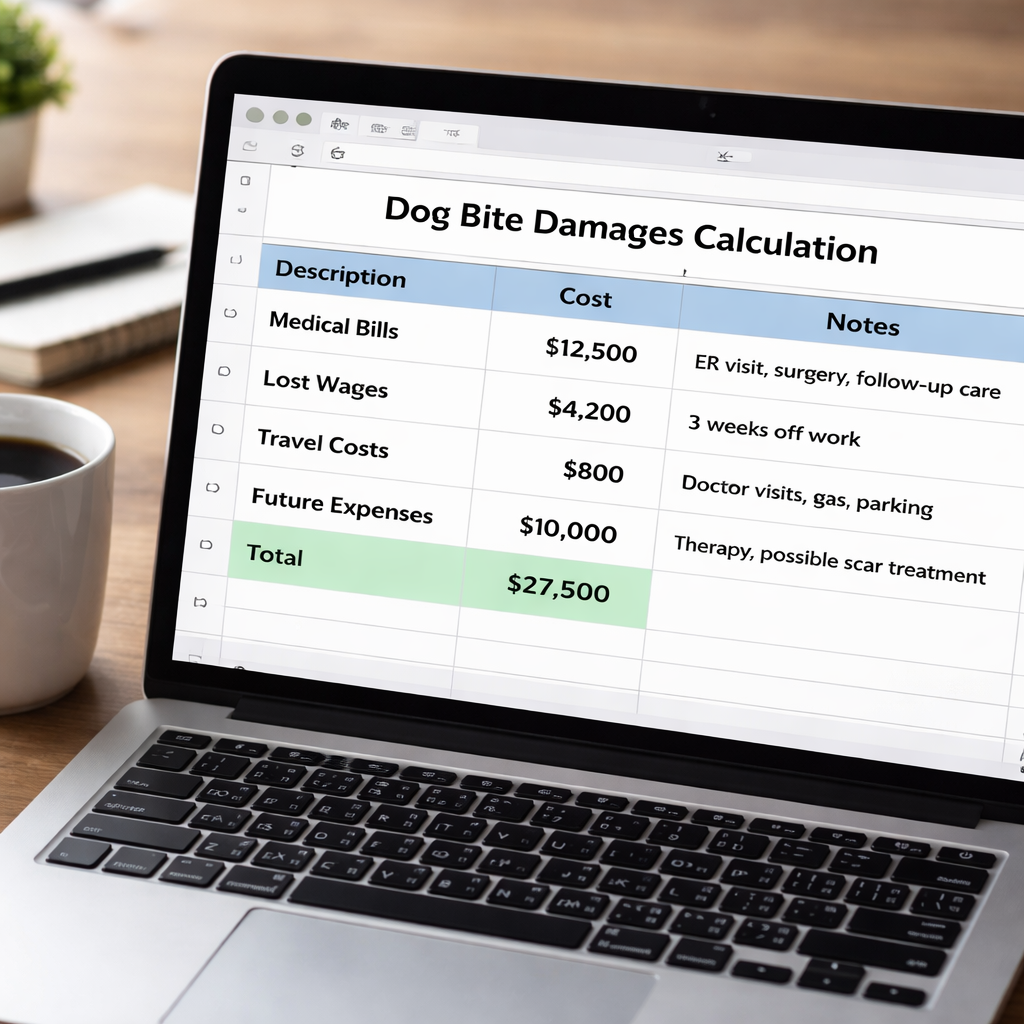
Now that you have medical records and proof of who owned the dog, you can start adding up the costs. Damages fall into two buckets: economic and non‑economic.
Economic damages are easy to count. They include:
- Medical bills , ER, surgery, meds, rehab.
- Lost wages , pay you missed while you healed.
- Travel , Uber rides to appointments.
- Property , clothing or a phone ripped in the bite.
Non‑economic damages cover the pain, the fear of going outside, and any lasting scar that hurts your confidence. These are harder to pin down, but they can be the biggest part of a settlement.
One tool many attorneys use is a settlement calculator. Scheuerman Law offers a free online calculator that lets you plug in each cost and see a ballpark figure.
Visit Scheuerman Law’s calculator for a quick estimate based on national data.
Another source, Sam & Dan, shares that the average dog bite settlement in 2022 was about $65,000, but the range can be huge. Read the details at Sam & Dan’s analysis.
When you add up your numbers, write them in a simple spreadsheet. Column A: expense type. Column B: amount. Column C: date. This sheet will become part of your demand letter.
Don’t forget to factor in future costs. If a scar may need surgery years from now, note that as a projected expense.
Below is a quick checklist you can print and fill out.
- List every medical invoice.
- Record each day you missed work.
- Add travel receipts.
- Estimate future rehab or cosmetic work.
- Write a short note on pain and anxiety.
Having this list ready means you won’t forget a single dollar when the insurance adjuster asks for proof.
Step 5: File the Claim and Navigate the Legal Process
With your evidence and a clear damage total, you’re ready to file the claim. Most cases start with a demand letter sent to the dog owner’s insurance company.
The letter should include:
- A brief recap of what happened.
- The total amount you’re seeking.
- Copies of medical bills and the damage spreadsheet.
- A deadline for a response (usually 30 days).
If the insurer replies with a low offer, you can either negotiate or move to a lawsuit. In Louisiana, you have one year from the bite to file a personal injury lawsuit. In Arizona, the clock is also tight , you must report the bite to animal control right away.
When you file a lawsuit, you’ll file a complaint in the appropriate court. The complaint names the owner (and any other parties) and asks the court to award you the damages you calculated.
After the filing, the case enters discovery. Both sides swap evidence , medical records, photos, witness statements. This stage can feel long, but each piece of proof you gathered earlier will be asked for again.
If the case doesn’t settle, it goes to trial. A judge or jury will hear both sides and decide if the owner is liable and how much you should get.
Throughout this process, a lawyer who works on a contingency fee (you pay nothing unless you win) can handle the paperwork, negotiate with insurers, and keep you focused on healing.
For a look at how Louisiana handles the whole process, read Charbonnet Law Firm’s guide. They break down each stage from demand letter to trial.
Arizona’s strict reporting rules are explained by Smith & Green. Follow their steps to keep the claim alive.
Conclusion
Filing a personal injury claim for dog bite may feel overwhelming, but you don’t have to walk it alone. Start by snapping photos, gathering witness info, and getting medical help right away. Then pinpoint the owner, tally every cost, and send a clear demand letter. If the insurer won’t pay a fair amount, a seasoned attorney can take the case to court.
Remember, the fastest way to protect your rights is to act now. Evidence fades, deadlines loom, and insurers will try to low‑ball you. Use the free, no‑obligation case review from Free Case Review , they’ll match you with a local lawyer who works on a contingency basis, so you pay nothing unless you win.
Take the first step today. Fill out the free form, get a confidential review, and let a trusted advocate stand by you while you focus on healing.
FAQ
What should I do immediately after a dog bite?
First, wash the wound with soap and water. Then get medical care right away, even if the bite seems minor. Take photos, note the location, and call animal control to file a report. Collect witness names if anyone saw the attack. These actions protect your health and give you solid proof for a personal injury claim for dog bite.
How long do I have to file a personal injury claim for dog bite?
Each state sets its own deadline, called the statute of limitations. In many states, you have one year from the bite date, but some states give only six months. Act fast, waiting too long can bar you from filing a personal injury claim for dog bite altogether.
Can I still claim if the dog’s owner says the dog was provoked?
Yes, but the owner may argue comparative fault. If you teased the dog, the court could cut your award by a percentage. Still, you can recover the rest of your damages. That’s why clear evidence, photos, witness statements, and a timeline, helps you beat a provocation defense in a personal injury claim for dog bite.
What types of damages can I recover?
You can claim economic damages like medical bills, lost wages, travel costs, and property damage. You can also claim non‑economic damages for pain, suffering, emotional distress, and any lasting scar or disfigurement. Both categories are part of a personal injury claim for dog bite.
Do I need a lawyer to file a personal injury claim for dog bite?
You don’t have to, but a lawyer who works on a contingency fee can boost your settlement. They know how to negotiate with insurers, gather the right proof, and handle court paperwork. The free case review from Free Case Review can connect you with a local attorney at no cost.
What if the dog’s owner doesn’t have insurance?
If the owner lacks insurance, you may still sue them in court to get a judgment. The judgment can be collected against the owner’s assets, or you may be able to claim against their homeowner’s policy if one exists. A lawyer can help you explore these options in your personal injury claim for dog bite.
Think you have a case?
Our network of personal injury attorneys offers free consultations — no fees unless you win.
Get Your Free Case Review →