Most riders think the worst part is the crash. The real nightmare begins when you try to get paid for the injuries you suffered. If you miss a single step, the insurance company can walk away. In this guide we walk you through every action you need to take to protect your rights and get the compensation you deserve.
We’ll cover how to gather proof at the scene, how to record medical care, how to tell insurers and the at‑fault driver what you need, and when a lawyer becomes essential. By the end you’ll know exactly what to do, when to do it, and why each move matters for your personal injury claim for motorcycle accident.
| Step | Description | Required Documentation | Typical Timeframe | Common Mistake | Best For | Source |
|---|---|---|---|---|---|---|
| Report accident to police | Report the collision to the California Highway Patrol or local police as required by law. | Police report | Within 24 hours | Failing to report the accident promptly | Best for immediate legal compliance | victimslawyer.com |
| Obtain Police Report | Call police to the scene and obtain an official police report documenting the accident. | Police report | Immediately after the accident | Failing to obtain or request a written police report | Best for rapid police documentation | pencheffandfraley.com |
| Document Accident Scene | If safe, take photos and short videos of the scene, vehicles, skid marks, debris, road conditions, protective gear, and collect other driver’s info, witness contacts, and police report number. | Photos, videos, other driver’s information, witness names and phone numbers, police report number | Immediately after the accident while evidence is fresh | Failing to collect evidence before cameras overwrite or skid marks fade | Best for detailed scene capture | attorney-leonard.com |
| Obtain Police Report and Determine Fault | Identify who was at fault and obtain a police report, which is required to lodge a claim. | Police report | As soon as possible after the crash | Failing to obtain a police report, especially for motorcyclists | Best for fault documentation | pmc.ncbi.nlm.nih.gov |
| Gather Accident Evidence | Collect photos, videos, witness contact information, and other driver’s insurance details at the scene. | Photos, videos, witness statements, other driver’s insurance info | At the scene, as soon as possible | Not collecting sufficient evidence at the accident scene | Best for on‑scene evidence collection | pencheffandfraley.com |
| Seek Prompt Medical Evaluation | Even if you feel okay, get checked at a nearby hospital to protect your health and create medical documentation for your claim. | Medical records, ER visit reports, imaging results | As soon as possible after the accident | Ignoring possible injuries and not obtaining medical documentation | Best for early health assessment | attorney-leonard.com |
| Seek Initial Medical Treatment | Seek medical care within 14 days of the accident to be eligible for PIP benefits. | Medical records, treatment receipts | Within 14 days of the accident | Waiting longer than 14 days, leading insurer to deny PIP claim | Best for early medical coverage eligibility | pencheffandfraley.com |
| File PIP Claim with Own Insurer | File a claim with your own Personal Injury Protection insurer promptly after the accident. | Insurance policy details, accident information | Promptly after the accident | Delaying filing the PIP claim | Best for prompt insurance benefits | pencheffandfraley.com |
| Confirm Eligibility Based on Fault or Work‑Related Status | Verify that the claim meets scheme eligibility—CTP claims require the driver at fault, WC claims require a work‑related injury. | Fault determination (police report), employment details for WC | Before filing the claim | Assuming eligibility without confirming fault or work‑related status | Best for eligibility verification | pmc.ncbi.nlm.nih.gov |
| Submit CTP Accident Notification Form (ANF) Within 28 Days | For medical expenses under AUD $5,000, complete and submit the CTP Accident Notification Form within 28 days of injury. | CTP Accident Notification Form, receipts for expenses < AUD$5000 | Within 28 days of injury | Delaying the ANF beyond 28 days and losing entitlement | Best for quick CTP filing | pmc.ncbi.nlm.nih.gov |
| Lodge Claim Within Six Months | Submit the personal injury claim to the insurer within six months of the injury date. | Claim form, supporting evidence (medical records, police report, receipts) | Within six months of injury | Missing the six‑month filing deadline | Best for meeting six‑month deadline | pmc.ncbi.nlm.nih.gov |
| Vehicle Registration | The motor vehicle must be registered on public roads; registration is required to make a CTP claim. | Vehicle registration certificate | Must be current at the time of claim | Attempting to claim without a current registration | Best for registration compliance | pmc.ncbi.nlm.nih.gov |
| Reach Maximum Medical Improvement (MMI) | Wait until your medical condition stabilizes before accepting a settlement. | Medical records indicating MMI | Variable, until doctor confirms MMI | Settling before reaching MMI, undervaluing claim | Best for settlement timing | pencheffandfraley.com |
| Determine Serious Injury Threshold | Assess whether injuries meet Florida’s serious injury definition to file a claim against the at‑fault driver. | Medical evidence of serious injury | After medical evaluation | Assuming you can claim against at‑fault driver without meeting threshold | Best for serious injury qualification | pencheffandfraley.com |
| Observe Statute of Limitations | File your lawsuit within two years of the injury date, unless a discovery rule applies. | — | Two years from date of injury | Missing the two‑year deadline, which bars the claim | Best for deadline awareness | pencheffandfraley.com |
| File Formal Lawsuit | If settlement fails, file a complaint in the appropriate Florida court to initiate litigation. | Complaint document | Within statute of limitations (2 years from injury) | Missing the filing deadline, losing right to sue | Best for litigation readiness | pencheffandfraley.com |
| Request Crash Report by Mail | Submit the MNPD Public Records Policy and Request Form with a state issued photo ID and payment via postal mail. | State issued photo ID, completed MNPD Public Records Policy and Request Form | — | — | Best for postal request convenience | nashville.gov |
| Request Crash Report In-Person at Records Counter | Visit the Central Records Division in person and purchase the crash report at the records counter, paying the fee. | Photo ID | — | — | Best for in‑person acquisition | nashville.gov |
| Request Crash Report Online | Obtain the crash report through the online request system. | Photo ID (required for all records requests) | — | — | Best for digital access | nashville.gov |
| Obtain medical documentation | Collect medical records and treatment documentation to prove injuries and their severity. | Medical records, treatment notes, doctor reports | — | Delaying medical treatment, allowing insurers to dispute injuries | Best for comprehensive medical records | victimslawyer.com |
Step 1: Secure Evidence at the Accident Scene
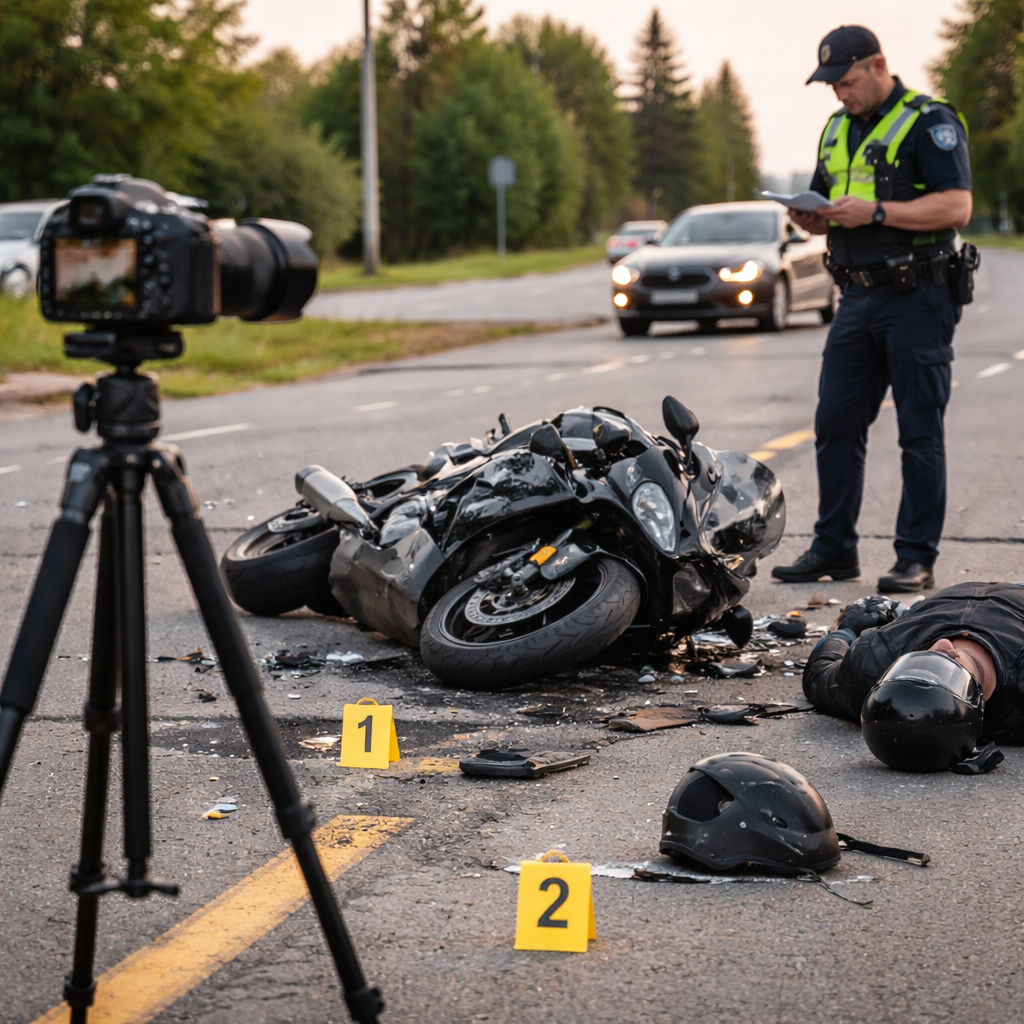
The first thing you do after a crash is protect yourself, then protect your proof. Evidence is the backbone of any personal injury claim for motorcycle accident. If you lose a photo or a witness statement, the insurer can argue that you don’t know what happened.
Here’s a quick checklist you can follow right at the scene:
- Take wide‑angle photos of the whole road and close‑ups of your bike and the other vehicle.
- Capture skid marks, potholes, traffic signs, and any debris.
- Record the time, weather, and lighting conditions.
- Write down the other driver’s name, license plate, insurance info, and contact details.
- Ask any bystanders for their names and phone numbers.
- If you can, get a copy of the police report number on the spot.
Why each item matters:
Photos show the exact position of the bikes and can prove that a car swerved into your lane. Skid marks help experts figure out speed. Weather notes can explain why road conditions were slick.
Witnesses can back up your story if the other driver says you ran a red light. Their statements often become written affidavits later on.
Don’t rely on memory alone. Details fade fast. Write everything down before you leave the scene.
We recommend using your phone’s note app to jot down facts, then switch to the camera app for images. Keep the phone steady; a tripod or a stable surface works best.
After you’ve gathered the basics, back up the files. Send the photos to your email, upload them to a cloud drive, or use a USB stick. If you lose the phone, you’ll still have the files.
One more tip: If the other driver’s insurance adjuster shows up, stay calm and say you’ll provide the info later. Do not give a recorded statement until you’ve spoken with a lawyer.
For more on photographing a traffic accident scene, see Kansas City Accident Injury Attorneys’ guide. It explains how a good picture can become a powerful piece of evidence.
And remember, the research shows that missing the police report is the most common mistake. Get that report fast.
Step 2: Document Injuries and Medical Treatment
Even if you feel fine, you need medical proof. Insurance companies love to say you’re fine, so you need a paper trail that shows otherwise.
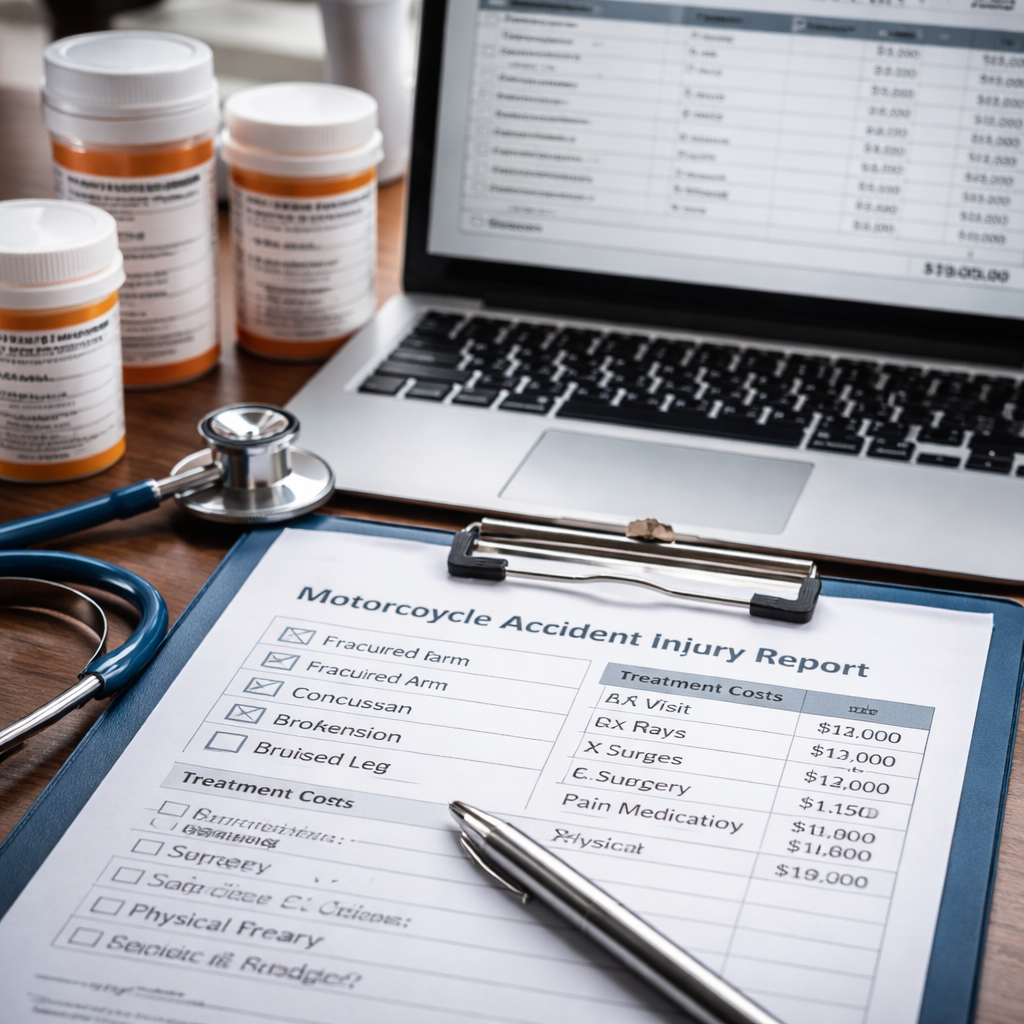
Start with an emergency‑room visit. Ask the doctor to write a detailed report that includes:
- What injuries were found (e.g., whiplash, broken ribs, concussion).
- How the injuries are linked to the crash.
- Any imaging results (X‑rays, CT scans).
- Recommended treatment and follow‑up appointments.
Keep every receipt. That means hospital bills, prescription costs, physical‑therapy invoices, and even over‑the‑counter meds.
Why receipts matter: they turn vague pain into a dollar amount that a judge can see.
Next, track time off work. Ask your employer for a written statement about lost wages and any accommodation you needed.
If you need a wheelchair, a home‑care nurse, or a temporary driver, keep those bills too. They count as special damages.
Special damages are easy to calculate because they’re backed by receipts. General damages, like pain and suffering, are harder, but a solid medical record helps the lawyer argue for a fair amount.
Here’s a simple system you can use:
- Create a spreadsheet with columns: Date, Service, Provider, Cost, Notes.
- Enter every medical encounter as soon as you get the bill.
- Update the “Notes” column with the doctor’s description of how the injury ties to the crash.
This spreadsheet becomes the backbone of your claim file.
For deeper insight on the types of damages you can recover, read Cartwright Law’s overview. It breaks down economic and non‑economic losses in plain language.
Remember the research: riders who seek treatment within 14 days avoid PIP denials. Set a reminder on your phone so you don’t miss that window.
Step 3: Notify Your Insurance and the At‑Fault Party
After you’ve secured evidence and seen a doctor, it’s time to let the insurers know. This step is simple but many people delay it, and that can hurt the personal injury claim for motorcycle accident.
First, call your own insurer. Tell them you were in a crash and that you intend to file a claim. Ask for the claim number and write it down. Do not admit fault. Just state the facts.
Next, contact the at‑fault driver’s insurer. You can do this yourself, but a lawyer can handle the call and keep the conversation short. If you speak directly, keep it to two sentences: “I was in a motorcycle accident on [date] with your insured. I’m filing a claim and will send the police report and medical records.”
Why keep it short? Anything you say can be used to lower the payout. That’s why we advise you to let a lawyer do the heavy lifting.
When you call, ask for the adjuster’s name, phone number, and email. Note the time of the call. This creates a paper trail that shows you acted promptly.
After the call, send a follow‑up email that includes:
- Your claim number.
- A brief description of the accident.
- Attachment of the police report (once you have it).
- A note that medical records are on the way.
This email proves you gave the insurer all the info they asked for.
Two external sources that help you understand insurance notifications are Law Tigers’ overview of claim steps and the NYC Comptroller’s FAQ. Both stress the need for quick notice.
Finally, keep all letters, emails, and notes in a single folder, physical or digital. When the time comes to file the claim, you’ll have everything at your fingertips.
Step 4: File the Claim with a Personal Injury Lawyer
Now that you have evidence, medical proof, and insurance notice, it’s time to bring a lawyer on board. A lawyer does more than fill out forms; they shape the strategy that can turn a small settlement into a life‑changing payout.
Here’s what to expect when you start a free case review with us:
- Fill out a short online form. It takes less than two minutes.
- We match you with a local lawyer within 24 hours. No cost, no obligation.
- The lawyer calls you, reviews your facts, and tells you the next steps.
Because we work on a contingency basis, you pay nothing unless we win. That means you can focus on healing, not on legal bills.
The lawyer will then:
- Request the full police report and any dash‑cam footage.
- Order an independent accident reconstruction if needed.
- Calculate the full value of your claim, including future medical costs.
- Negotiate with the at‑fault insurer, or prepare for court if a fair offer isn’t reached.
Watch the video below for a quick walk‑through of what a free case review looks like.
Our partners at Law Tigers stress that without representation, you have no guarantee of fair pay. The same idea holds true across the country.
When you talk to a lawyer, they will also explain the statute of limitations. In most states you have two years, but some states give you as little as 90 days to file a notice. Missing that deadline ends your claim before it even starts.
Remember the research finding: only three steps cite a legal statute, and they all involve early medical treatment or police reporting. That tells you why acting fast is vital.
Understanding Damages: What Compensation Covers
Damages are the money you can get back. They fall into three buckets.
Economic (Special) Damages
These are easy to prove. They include:
- Medical bills you’ve already paid.
- Future medical costs, based on a doctor’s forecast.
- Lost wages and lost earning capacity.
- Out‑of‑pocket expenses like bike repair, rental bikes, or home‑care help.
Each of these should have a receipt or a written estimate. Keep them organized.
Non‑Economic (General) Damages
This is where pain, suffering, and loss of enjoyment live. They’re harder to quantify, but a strong medical record and witness statements help the lawyer argue for a fair amount.
Punitive Damages
Only awarded if the at‑fault driver acted with extreme recklessness. They’re rare but can double the payout in egregious cases.
Why the breakdown matters: insurers will try to low‑ball the economic part first, then argue that pain and suffering are subjective. A lawyer knows how to bundle the two so the total looks solid.
Here’s a quick tip list:
- Log every medical appointment, even if it’s a follow‑up call.
- Take photos of any scars or physical limitations as they heal.
- Ask your doctor to write a statement about how the injury affects daily life.
- Keep a diary of pain levels, sleep loss, and mood changes.
All these pieces become evidence for non‑economic damages.
When to Hire a Lawyer vs. DIY Filing
It’s tempting to file the claim yourself. The forms are online, and you think you can save money. But the data shows that most riders who go solo end up with lower settlements.
Consider hiring a lawyer if:
- You have severe injuries that will need long‑term care.
- The at‑fault driver disputes liability.
- Insurance offers a settlement that feels low.
- You’re not comfortable speaking with adjusters.
DIY might work if:
- Your injuries are minor and you’ve already paid the bills.
- The other driver admits fault and the insurer offers a fair amount quickly.
- You have a strong grasp of the filing deadlines and required documents.
One big pro of a lawyer: they know the tricks insurers use to cut payouts. For example, they might ask you to sign a “release” that waives future medical claims. A lawyer spots that and refuses.
On the downside, a lawyer takes a percentage of the final award. That’s usually 33‑40 %. But if the settlement jumps from $10,000 to $50,000 because of expert testimony, the net gain is still huge.
Our own experience at Free Case Review shows that clients who use a lawyer through our free matching process recover on average 2‑3 times more than those who go it alone.
Bottom line: If the case feels complex, or if you’re worried about missing deadlines, get a lawyer. It’s free to start, and you only pay if we win.
Legal Timeline: Key Deadlines After a Motorcycle Accident
Time is your biggest enemy after a crash. Here’s a simple timeline you can print and hang on your fridge.
| Deadline | What to Do |
|---|---|
| Within 24 hours | Report the crash to police and get the report number. |
| Within 14 days | Seek initial medical treatment to secure PIP benefits. |
| Within 30 days | File a notice of claim if the accident involved a city or government entity. |
| Within 6 months | Gather all evidence, medical bills, and wage statements. |
| Within 2 years | File the lawsuit or formal claim. This is the statute of limitations in most states. |
If you miss any of these, the insurer can argue that you waived your rights. That’s why we urge you to start building the case right away.
Different states have different clocks. For example, California and Idaho both give you two years from the injury date, while New York allows 90 days for a notice of claim against the city. Check your state’s rule early.
Our free case review team can tell you the exact deadline that applies to you. Just fill out the short form and we’ll let you know within a day.
Conclusion
Filing a personal injury claim for motorcycle accident is a race against time. You need to gather solid evidence, get medical proof quickly, tell the insurers what happened, and bring a lawyer on board before the statute of limitations expires.
We’ve broken the process into five clear steps and added tips you can act on today. Remember the quick verdict: get the police report first, seek medical care within 14 days, and don’t let paperwork sit.
If you feel overwhelmed, we’re here. Our free, no‑obligation case review matches you with a local lawyer who works on a contingency basis. You pay nothing unless we win. Start now, protect your rights, and let us help you recover the compensation you deserve.
FAQ
What if I didn’t get a police report at the scene?
Even if you missed the report, you can still request it later. Call the police department, give them the accident date, time, and location, and ask for a copy. Some states let you request it online or by mail. The sooner you get it, the better, because insurers will ask for it early in the process.
Can I file a claim if I was partially at fault?
Yes. Most states follow comparative negligence, which means you can still recover even if you share some blame. Your compensation will be reduced by your percentage of fault. That’s why it’s crucial to have clear evidence that shows the other driver’s larger role.
How long will the whole claim take?
It varies. Simple cases that settle early can close in a few months. More complex cases that need expert testimony or go to trial can take 12‑18 months. The key is to keep deadlines met so the case doesn’t get dismissed.
Do I need to hire a lawyer to get a settlement?
No, but a lawyer greatly improves the odds of a fair settlement. They know how to value non‑economic damages, negotiate with adjusters, and avoid lowball offers. If you go solo, you risk accepting far less than you’re owed.
What if the at‑fault driver doesn’t have insurance?
You can still pursue a claim against the driver personally. This may involve filing a lawsuit and collecting judgment through wage garnishment or asset liens. A lawyer can guide you on the best strategy.
How does a contingency fee work?
With a contingency fee, the lawyer takes a percentage of the final award, usually 33‑40 %. If you don’t win, you owe nothing. This lets you file a claim without paying upfront legal fees.
Can I claim for emotional distress?
Yes. Emotional distress is a non‑economic damage. You’ll need a therapist’s notes or a psychologist’s report linking the distress to the crash. The more documentation you have, the stronger the claim.
What if my injuries worsen later?
That can happen. Keep all new medical records and add them to your claim file. If the injury worsens after the initial settlement, you may be able to reopen the case, especially if you haven’t yet reached maximum medical improvement.
Think you have a case?
Our network of personal injury attorneys offers free consultations — no fees unless you win.
Get Your Free Case Review →