Time runs fast after an injury. If you miss the deadline, you lose the chance to get compensation. This guide shows you exactly how to work with the personal injury statute of limitations california, step by step. We’ll walk you through spotting the accident date, figuring out the right deadline, gathering proof, filing on time, and spotting any tolling tricks.
We’ll also point out where the fastest‑moving claims sit and how the longest‑lasting deadline works. By the end you’ll know the exact dates to mark on your calendar and how Free Case Review can give you a free, no‑obligation snapshot of every deadline.
| Claim Type | Statute of Limitations | Trigger Event | Tolling Exceptions | Maximum Filing Deadline | Best For | Source |
|---|---|---|---|---|---|---|
| Free Case Review (Our Pick) | — | — | — | — | Best overall overview | freecasereview.io |
| Medical malpractice | 3 years from injury, or 1 year from discovery | date of injury or date of discovery | delayed discovery rule, minor under 17, mental disability, defendant fled California | three years from the date of the injury, or one year from the date the plaintiff discovers, whichever occurs first | Best for complex discovery rules | saclaw.org |
| Personal injury | 2 years | date of injury | workers' compensation claim, minor, mental incompetence, equitable tolling | 2 years | Best for standard 2‑year claims | saclaw.org |
| auto accidents | 2 years | date of injury | delayed discovery rule, minor under 17, mental disability, defendant fled California | two years from the date of injury | Best for vehicle collisions | sawllaw.com |
| motorcycle accidents | 2 years | date of injury | delayed discovery rule, minor under 17, mental disability, defendant fled California | two years from the date of injury | Best for two‑wheel crashes | sawllaw.com |
| pedestrian accidents | 2 years | date of injury | delayed discovery rule, minor under 17, mental disability, defendant fled California | two years from the date of injury | Best for foot‑traffic injuries | sawllaw.com |
| Slip and fall | 2 years | date of injury | minor under 18 | 2 years from date of injury | Best for premises liability | victimslawyer.com |
| Bicycle accident | 2 years | date of injury | minor under 18 | 2 years from date of injury | Best for cyclist injuries | victimslawyer.com |
| personal injury claim against a governmental entity | 6 months | date of claim rejection | — | 6 months from date of rejection | Best for government claims | youtube.com |
| Claim against city/county/agency | 6 months | date of injury | — | 6 months | Best for municipal claims | youtube.com |
| truck accidents | 2 years | date of injury | delayed discovery rule, minor under 17, mental disability, defendant fled California | two years from the date of injury | Best for heavy‑vehicle incidents | sawllaw.com |
| nursing home negligence | 2 years | date of injury | delayed discovery rule, minor under 17, mental disability, defendant fled California | two years from the date of injury | Best for elder care cases | sawllaw.com |
| defective products | 2 years | date of injury | delayed discovery rule, minor under 17, mental disability, defendant fled California | two years from the date of injury | Best for product liability | sawllaw.com |
| premises liability | 2 years | date of injury | delayed discovery rule, minor under 17, mental disability, defendant fled California | two years from the date of injury | Best for property owner disputes | sawllaw.com |
| catastrophic injuries | 2 years | date of injury | delayed discovery rule, minor under 17, mental disability, defendant fled California | two years from the date of injury | Best for severe trauma | sawllaw.com |
Step 1: Determine When the Accident Occurred
The first thing you need to do is lock down the exact date of the accident. The personal injury statute of limitations california usually starts the day the injury happened. If you can’t remember the day, pull any documents that show the date, police reports, medical records, or a calendar note.
Why does the date matter? Because the clock starts ticking the moment the harm occurs. If you wait too long to note the date, you might think you have more time than you really do.
Here’s a quick way to confirm the date:
- Check the date on the police report (if there was one).
- Look at the admission date on hospital paperwork.
- Search your phone for a text or email that mentions the incident.
- Ask witnesses to write down what they remember.
Once you have the date, write it down in a dedicated notebook. Treat that notebook like a legal diary, write the date at the top of each entry.
Imagine you were in a car crash on March 3, 2024. Your two‑year deadline ends on March 3, 2026. If you miss that day, the court will likely toss your claim.
Legal sources confirm the two‑year rule for most personal injury claims. The California Courts Self‑Help site explains that you “generally have to sue within a certain amount of time of something happening.” California Self‑Help Statutes also notes that the clock can start at discovery if the injury wasn’t obvious.
But not all claims follow the simple two‑year rule. Government‑entity claims only give you six months after the agency rejects your claim. That’s why you need to know the exact trigger event for your case.
Bottom line:Pinpoint the accident date right away; it’s the launch pad for the personal injury statute of limitations california.
Step 2: Identify the Type of Injury and Applicable Deadline
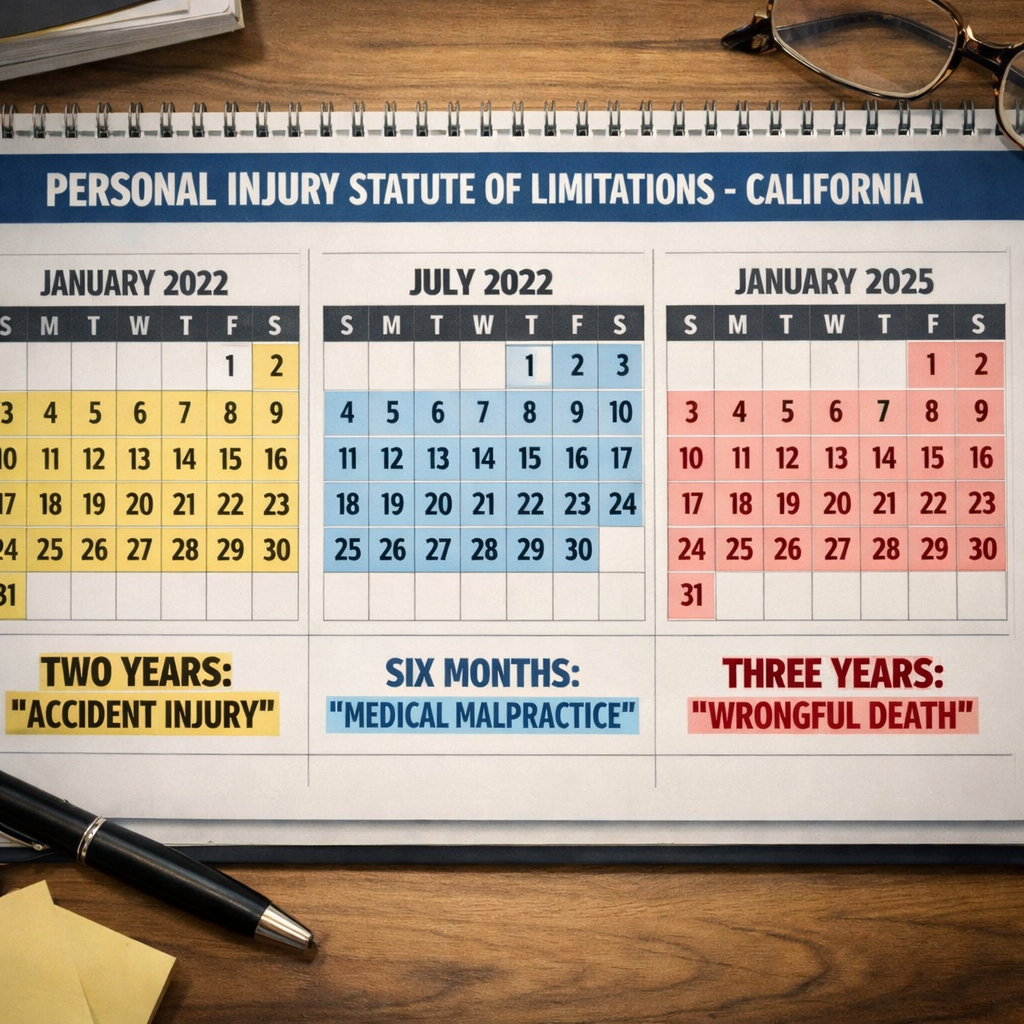
Different injuries have different clocks. Knowing which category your case falls into tells you whether you have two years, six months, or even three years.
Here are the main buckets:
- Standard personal injury (car crash, slip‑and‑fall, dog bite):2 years.
- Medical malpractice:3 years from injury or 1 year from discovery, whichever comes first.
- Government‑entity claims:6 months from the date the agency rejects your claim.
- Product liability, motorcycle, bicycle, truck accidents, nursing home negligence, premises liability, catastrophic injuries:2 years.
To figure out where you land, ask yourself two questions:
- Who caused the injury? A private party, a medical provider, or a government body?
- Was the injury obvious right away, or did it show up later?
If the answer to #1 is “government,” you’re in the six‑month zone. If #2 is “later discovery,” you might get the medical‑malpractice rule.
Let’s walk through a real‑world scenario. Imagine you slipped on a broken sidewalk owned by the city. The city denied your claim on June 1, 2025. Your deadline is six months from that denial, so you must file by Dec 1, 2025. Miss that, and you lose the case.
Another example: You had a surgery in Jan 2024 but didn’t feel any pain until Sept 2024. The discovery rule means your one‑year clock starts in Sept 2024, giving you until Sept 2025 to sue.
For the official list of deadlines, the Sacramento Law site provides a clear chart that matches each claim type to its limitation period. Sacramento Law Statutes also explains how the discovery rule works for medical cases.
Victim’s Lawyer breaks down why the two‑year window is the norm for most injuries and how missing it can end a claim. Victim’s Lawyer Explanation
Bottom line:The personal injury statute of limitations california varies by injury type, identify yours early to stay on track.
Step 3: Gather Evidence and Document the Injury
Good evidence is the backbone of any claim. Without it, even a timely filing can fall flat.
Start with the basics:
- Take photos of the scene right away. Capture angles, hazards, and any visible injuries.
- Get copies of medical records, doctor notes, and test results.
- Collect bills for treatment, prescriptions, and rehab.
- Write down every symptom you feel, even if it seems minor.
Next, secure witness statements. Ask anyone who saw the accident to write a short paragraph describing what they saw. Even a text message from a friend can help.
Don’t forget electronic proof. Police reports, 911 call logs, and dash‑cam footage are all strong pieces of proof.
Ledger Law notes that “photos of the scene or injuries, medical bills, witness statements, and police reports” are essential evidence. Ledger Law Evidence Guide They also stress the need to keep originals and make digital backups.
Tim Wright Law adds that timing matters: “If you wait too long to gather evidence, memories fade and records can be destroyed.” Tim Wright Law Tips This is why we advise you to start the evidence hunt within 48 hours.
Here’s a step‑by‑step checklist you can print:
- Take photos within 24 hours.
- Request medical records from each provider.
- Ask witnesses for written statements.
- Secure any official reports (police, fire, etc.).
- Create a master file (physical folder + cloud backup).
Once you have everything, you’ll be ready to show a lawyer exactly what you have. That speeds up the review process and helps you get a fair offer faster.
Bottom line:Gather solid proof fast; strong evidence keeps the personal injury statute of limitations california from becoming a dead‑end.
Step 4: File the Claim Within the Required Timeframe
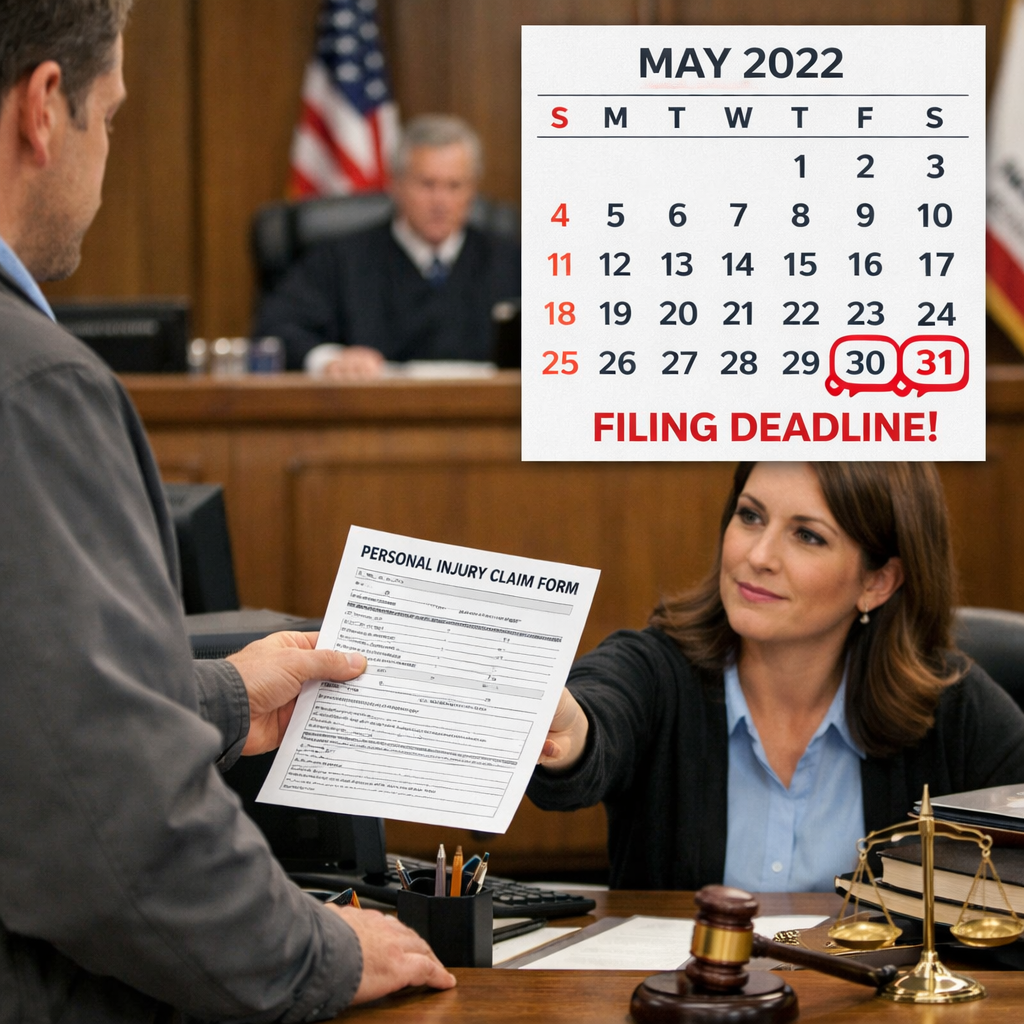
Now that you know the deadline and have evidence, it’s time to file. The filing step is where many people slip up.
First, decide where to file. You usually file in the county where the injury happened or where the defendant lives. The court’s website will have the exact forms you need.
Key forms include:
- Summons (Form SUM‑100).
- Civil Case Cover Sheet (Form CM‑010).
- Complaint (Form PLD‑PI‑001) , you’ll attach cause‑of‑action attachments for auto accidents, negligence, etc.
The California Self‑Help site lists each form and offers downloadable PDFs. Self‑Help Filing Guide Follow the step‑by‑step instructions there.
When you file, you also get a chance to ask the court to keep certain info private. If you’re worried about personal data, you can file a Request to Keep a Name Confidential (Form MC‑125). This is useful if your case involves sensitive health details. Confidentiality Forms
After filing, you’ll receive a docket number. Keep that number handy; you’ll need it for every future communication.
Don’t forget to serve the defendant with the papers. You can do this by a professional process server or, in some cases, by certified mail.
"The best time to start building a claim is the day after the injury. Waiting even a week can shrink your window."
If you’re unsure about any step, a free case review can walk you through the paperwork at no cost. We’ll match you with a local attorney who can file for you on a contingency basis, meaning you pay nothing unless you win.
Remember, the personal injury statute of limitations california does not pause for you. If you miss the deadline, the court will dismiss your case, even if you have strong evidence.
Bottom line:Filing on time and correctly locks in your right to sue under the personal injury statute of limitations california.
Step 5: Understand Exceptions and Extensions
Even if you think you’re out of time, some rules can pause or stretch the clock. These are called tolling exceptions.
Common tolling situations in California include:
| Exception | When it Applies | How it Affects the Clock |
|---|---|---|
| Minor (under 18) | Injury occurs when you’re under 18 | Clock starts on your 18th birthday. |
| Incapacity | You’re mentally or physically unable to act | Clock pauses until you regain capacity. |
| Discovery Rule | Injury not discovered right away (common in medical malpractice) | Clock starts when you reasonably should have discovered the injury. |
| Defendant Out of State | Defendant leaves California | Clock stops until they return. |
| Government Claim Rejection | You filed a claim with a city/county and they denied it | Clock starts on the rejection date; you then have six months. |
HSR Legal explains that these tolling rules can add weeks, months, or even years to your filing window. HSR Legal Exceptions
Let’s say you were 16 when you were injured in a car crash. You have two years from the day you turn 18, not from the accident date. That effectively gives you a four‑year window.
Another real‑world case: A plaintiff discovered a surgical error three years after the operation. Because the discovery rule applies, the one‑year discovery clock gave them a new deadline that fell within the three‑year overall limit.
Be aware that some exceptions only apply to specific claim types. For example, the “minor under 18” rule only appears for slip‑and‑fall and bicycle accidents in the research table.
When you’re unsure whether an exception fits, a quick free case review can clarify. We’ll check the facts and let you know if you have extra time.
Remember, the personal injury statute of limitations california is strict, but it does allow for these built‑in pauses. Ignoring them can cost you.
Bottom line:Tolling rules can extend the filing window, check them before you assume you’re out of time.
Conclusion
We’ve walked through every piece of the personal injury statute of limitations california puzzle. You now know how to lock down the accident date, match your injury to the right deadline, collect proof, file the paperwork, and spot any tolling tricks.
Time is the biggest enemy after an injury. A missed deadline means no compensation, no matter how strong your case. That’s why acting fast, staying organized, and getting a free, no‑obligation review from Free Case Review can be a game‑changer.
Free Case Review gives you a confidential, zero‑cost snapshot of your claim’s deadline and matches you with a local attorney who works on a contingency basis. You pay nothing unless you win, so there’s no risk to you.
If you’ve read this far, you’re ready to take the next step. Grab a notebook, mark the dates, start gathering evidence, and reach out for a free case review today. Protect your rights before the clock runs out.
FAQ
What is the standard deadline for most personal injury claims in California?
The standard deadline is two years from the date of injury. This is called the personal injury statute of limitations california. If you wait beyond that, the court will likely dismiss your case, even if you have strong evidence.
Do government‑entity claims have a different deadline?
Yes. If you’re suing a city, county, or state agency, you usually have six months from the date the agency rejects your claim. That six‑month window is part of the personal injury statute of limitations california but is much shorter than the usual two‑year period.
How does the discovery rule affect medical‑malpractice cases?
The discovery rule lets the clock start when you first realize (or should have realized) the injury. For medical malpractice, you get three years from the injury or one year from discovery, whichever comes first. This is a key part of the personal injury statute of limitations california for healthcare cases.
Can the statute of limitations be paused for minors?
Yes. If you were under 18 when the injury happened, the deadline pauses until you turn 18. Then you have the full two years from that birthday to file. This tolling exception is built into the personal injury statute of limitations california.
What if the defendant leaves California?
When a defendant flees the state, California law tolls the statute of limitations. The clock stops and only resumes when the defendant returns. This can add valuable time under the personal injury statute of limitations california.
Do I need a lawyer to file a claim?
You don’t have to, but a lawyer can help you fill out the correct forms, meet deadlines, and protect your rights. Free Case Review will connect you with a local attorney at no cost unless you win, making the process low‑risk.
How can I keep my personal information private during a lawsuit?
You can file a Request to Keep a Name Confidential (Form MC‑125) with the court. This helps hide your address, phone number, and other details from the public record. It’s a useful tool when the personal injury statute of limitations california is running.
What should I do if I think I’ve missed the deadline?
Don’t panic. Check if any tolling exceptions apply, minor status, discovery rule, or defendant out‑of‑state could extend the deadline. Then contact Free Case Review for a quick, free assessment. We’ll let you know if you still have a chance to file.
Think you have a case?
Our network of personal injury attorneys offers free consultations — no fees unless you win.
Get Your Free Case Review →